2026-10-19 ·
Complete Guide to Contaminated material removal in Citrus Heights, California
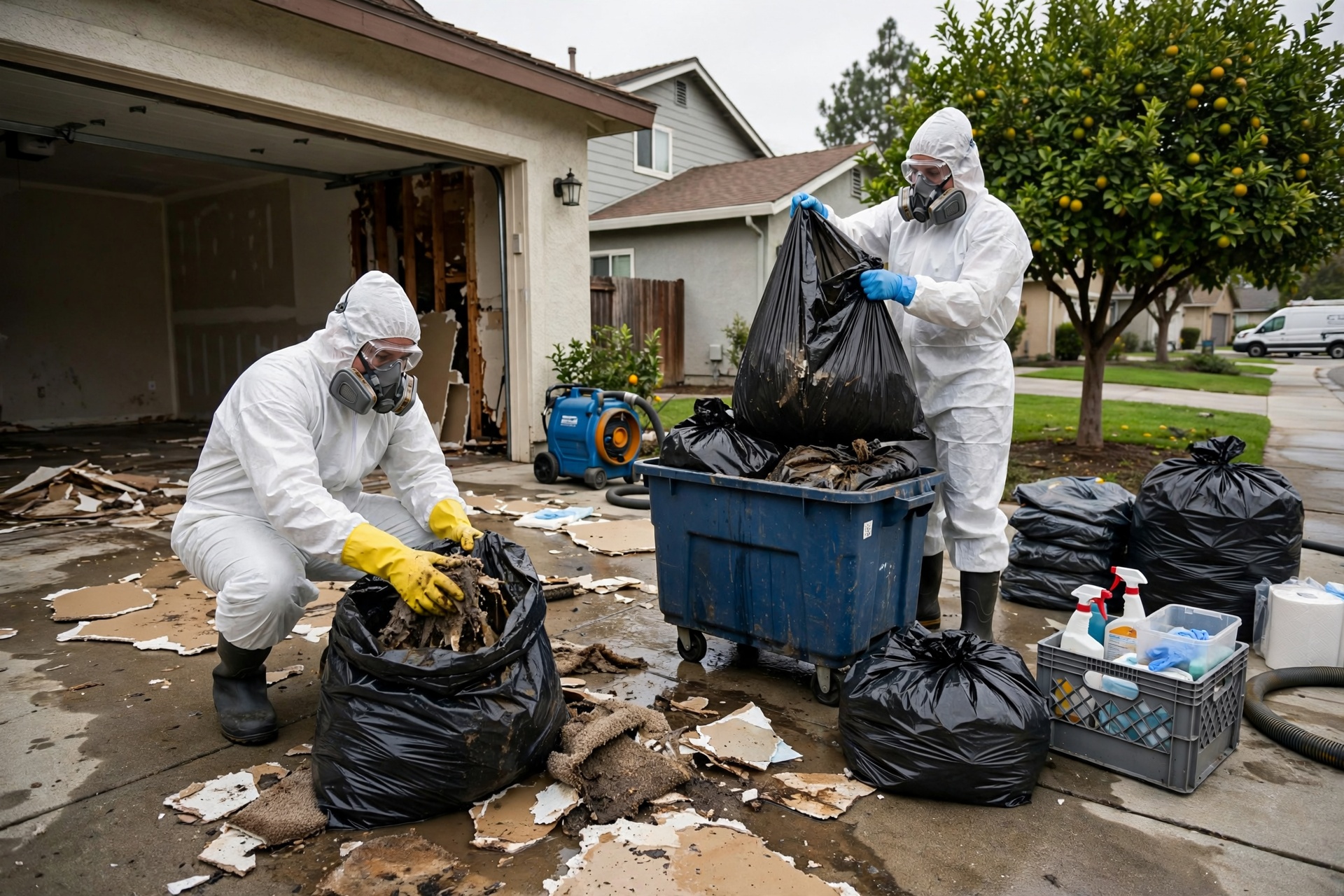
Contaminated material removal in Citrus Heights focuses on safely extracting sewage-soaked drywall, carpet, furniture, and insulation from properties in neighborhoods such as Downtown Citrus Heights, Rusch Park, and Sylvan Old Auburn. Homes built decades ago in these areas often feature older plumbing that fails during heavy winter rains despite the region's mild winters and hot-summer Mediterranean climate.
Identifying Contaminated Materials After Sewage Events
Sewage backups commonly affect single-story ranch homes and older multi-unit buildings near Rusch Park and the Citrus Heights Community Center. Operators look for saturation in porous materials like particleboard cabinets, vinyl flooring underlayment, and fiberglass insulation within wall cavities. In Sylvan Old Auburn, tree roots frequently invade sewer lines on sloped lots, pushing contaminated water into finished basements. Visible signs include dark staining on baseboards, musty odors that persist after initial drying, and soft spots in subfloors. Materials within 12 inches of the water line are typically removed to prevent hidden mold growth during the area's warm, dry summers. Properties close to Arcade Creek see higher groundwater influence that keeps soil saturated longer, increasing the volume of items that must be cut out and bagged.
Step-by-Step Removal Process
Technicians begin by establishing containment barriers using plastic sheeting and negative air machines to protect unaffected rooms. They then remove and double-bag all porous items, labeling each bag with the room of origin before transport to approved Sacramento County disposal sites. Non-porous surfaces receive initial extraction followed by repeated cleaning with EPA-registered disinfectants. In homes near Roseville or Orangevale, crews often encounter concrete slab foundations that require moisture mapping with infrared cameras because water migrates under the slab. All removed materials are weighed and documented for the property owner. Final verification includes ATP swab testing to confirm bacterial reduction before any reconstruction begins.
Local Conditions That Change the Job
The hot-summer Mediterranean climate means rapid drying outdoors but trapped moisture inside wall cavities during mild winters when residents run heating systems. Older housing stock in Greenback Corridor and Birdcage Heights often lacks modern vapor barriers, allowing sewage to wick upward several feet. Terrain near Sylvan Corners features gentle slopes that direct runoff toward foundations during rare but intense storms. Proximity to Sacramento increases traffic delays for equipment transport, so crews stage extra supplies at the 7725 Auburn Blvd location for 24/7 Emergency Service calls. Soil in these neighborhoods is predominantly clay-loam that retains moisture, extending drying times compared with sandier areas farther east.
Health and Safety Protocols
Workers wear full PPE including respirators rated for organic vapors and chemical-resistant suits when handling black water. All cuts into contaminated drywall occur from the top down to limit aerosol spread. Waste is never left overnight at residential sites; loads move directly to permitted facilities in Sacramento County. Homeowners receive written inventories of every item removed so insurance claims stay accurate. Ventilation continues for 48 to 72 hours after removal to reduce lingering odors before any new materials are installed.
Continuing Your Research
Readers dealing with widespread saturation often review the detailed steps in our Complete Guide to Black water cleanup in Citrus Heights, California. Properties with repeated backups may also need targeted work outlined in the sewage backup cleanup service page. For homes in Rusch Park specifically, the Rusch Park service area page lists common triggers seen on local streets.