2026-10-19 ·
Complete Guide to Structural drying and dehumidification in Citrus Heights, California
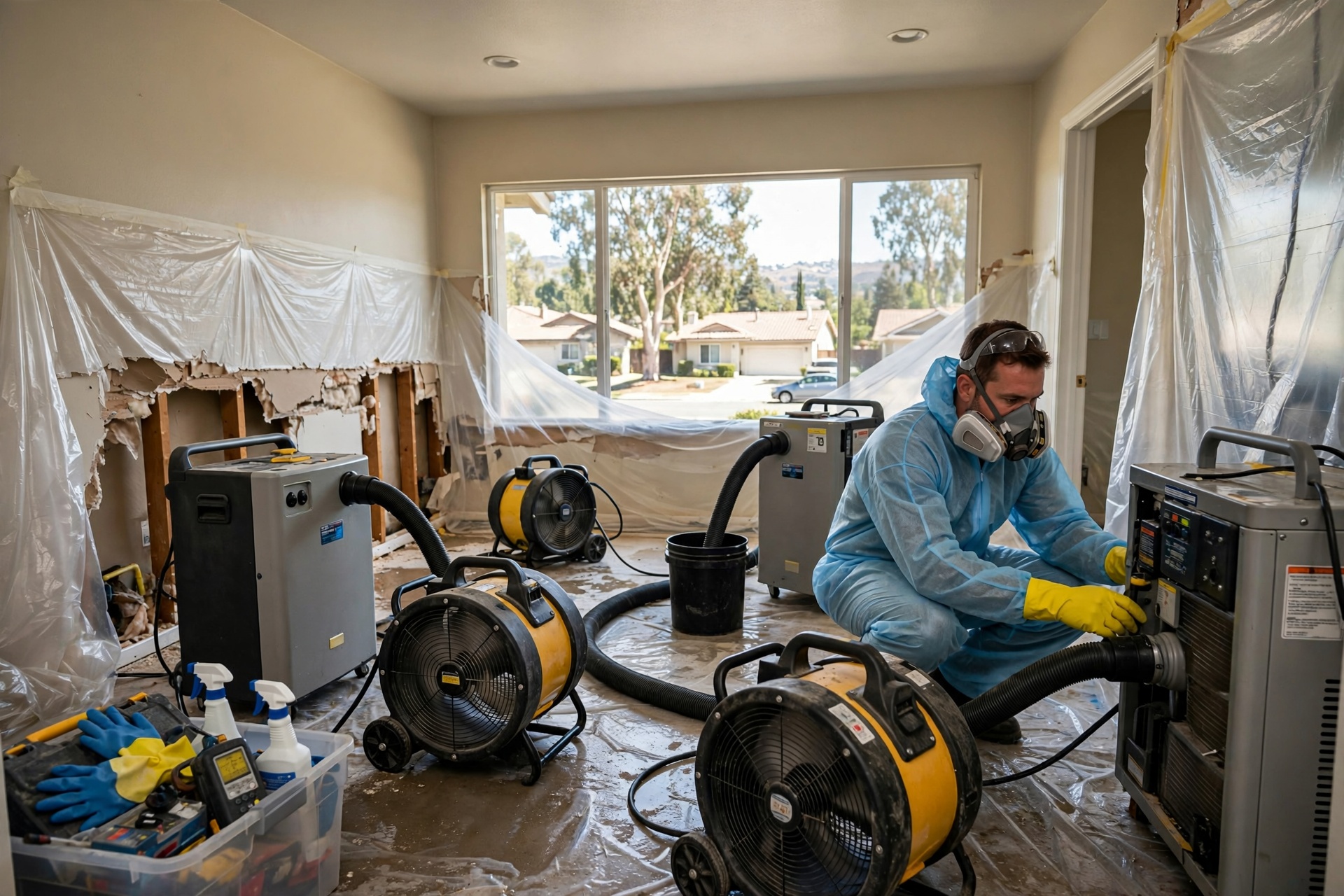
In Citrus Heights, structural drying and dehumidification after sewage backups usually requires 5-10 days for complete moisture removal in single-story homes common throughout Sacramento County. The hot-summer Mediterranean climate brings dry summers that aid evaporation but mild winters with occasional rain that can prolong drying in crawl spaces and wall cavities. Homes in areas like Rusch Park and Sylvan Old Auburn often feature older wood-frame construction with limited insulation, which traps moisture from black water incidents and demands targeted airflow and moisture monitoring.
Climate Effects on Drying Times
Citrus Heights experiences hot, dry summers that speed surface evaporation yet leave hidden moisture in subfloors and behind baseboards. Mild winters with lower rainfall still allow humidity spikes near Arcade Creek that slow dehumidification in basements and utility rooms. Technicians adjust equipment run times based on these patterns, running commercial dehumidifiers longer during winter months to reach the 40-50 percent relative humidity target required to prevent mold in Sacramento County homes. Properties near Roseville and Orangevale share similar conditions, so crews often reference local weather data when planning extraction and drying sequences after sewage extraction and removal.
Equipment Choices for Local Homes
Air movers and low-grain refrigerant dehumidifiers handle the volume of moisture typical in 1,200- to 2,000-square-foot Citrus Heights residences. Moisture meters track readings in drywall and hardwood floors common in Downtown Citrus Heights and Birdcage Heights. In older Sylvan Old Auburn homes, crews place additional fans in crawl spaces to address soil moisture that rises after heavy winter rains. These tools replace saturated air quickly while avoiding damage to plaster walls found in many 1960s-era properties around the Citrus Heights Community Center.
Step-by-Step Drying Process
- Remove standing water and contaminated materials immediately.
- Place air movers at 45-degree angles along walls to create airflow.
- Position dehumidifiers to maintain 40-50 percent relative humidity.
- Monitor moisture levels daily with pin and pinless meters.
- Adjust equipment placement every 24-48 hours based on readings.
- Continue until all affected materials reach 12-14 percent moisture content. This sequence prevents secondary damage in neighborhoods where homes sit on flat lots with poor drainage near Rusch Park.
Challenges in Sacramento County Housing Stock
Many Citrus Heights homes built before 1980 have limited vapor barriers, allowing sewage moisture to migrate into insulation and subfloors. Flat terrain in Greenback Corridor and Antelope Crossing areas creates pooling that extends drying beyond the initial 5-10 day window. Technicians frequently open wall cavities in these properties to install drying mats and prevent hidden mold growth. Nearby Sacramento and Roseville crews share similar experiences with the same housing stock and soil conditions.
For related guidance after a backup, see the Complete Guide to Emergency sewage cleanup in Citrus Heights, California and the Complete Guide to Basement sewage cleanup in Citrus Heights, California. Structural drying and dehumidification services are available through structural drying and dehumidification to address these specific local conditions.